|
|
|

|

|
Currently Available
Local Pickup - Text: (936) 652-1940 - Cash Only
Updated: Oct 27, 2026
|
| Type |
Species/Breed |
Gender |
Description |
Hatch
Date |
#
Avail |
Age |
Current
Price |
| Bantam | Tinks | Straight-Run | Old English | Oct 09, 2026 | 3 | 2.6 wks | $ 8.50 | | | Sexed | Old English: 2♂ 4♀ | May 29, 2026 | 6 | 21.6 wks | $ 21.00 | | Layer | Black Star | Pullets | Brown Egg Layer | Oct 09, 2026 | 2 | 2.6 wks | $ 9.00 | | Cinnamon Queen | Pullets | Brown Egg Layer | Oct 09, 2026 | 43 | 2.6 wks | $ 9.00 | | | Pullets | Brown Egg Layer | Sep 14, 2026 | 5 | 6.1 wks | $ 14.00 | | | Pullets | Brown Egg Layer | Aug 13, 2026 | 14 | 10.7 wks | $ 19.75 | | | Pullets | Brown Egg Layer | Jul 23, 2026 | 18 | 13.7 wks | $ 24.00 | | Dominique | Sorted | Pilgrim Fowl | Oct 09, 2026 | 2 | 2.6 wks | $ 10.50 | | Lady Gray | Sorted | Pastel Blue/Green Eggs | Oct 09, 2026 | 6 | 2.6 wks | $ 9.00 | | Rhode Island Red | Sorted | Production Reds | Oct 09, 2026 | 12 | 2.6 wks | $ 10.00 | | Novelty | Polish | Straight-Run | Buff Laced | Oct 09, 2026 | 2 | 2.6 wks | $ 9.50 | | | Straight-Run | Buff Laced | Sep 14, 2026 | 2 | 6.1 wks | $ 14.50 | | Peafowl | India Blue | Straight-Run | Blue & BS | Aug 13, 2026 | 2 | 10.7 wks | $ 66.00 | | | Sexed | Blue & BS: 5♂ 4♀ | Jul 23, 2026 | 9 | 13.7 wks | $ 70.50 | | | Sexed | Blue: 2♂ 2♀ | Jul 04, 2026 | 4 | 16.4 wks | $ 74.50 | | Pheasant | Golden, Red | Sexed | Ornamental: 1♂ 1♀ | Jun 18, 2026 | 2 | 18.7 wks | $ 49.25 | | Golden, Yellow | Sexed | Ornamental: 1♂ | Jul 04, 2026 | 1 | 16.4 wks | $ 46.50 | | | Sexed | Ornamental: 1♂ 1♀ | Jun 18, 2026 | 2 | 18.7 wks | $ 49.25 | |
| | |
|
2026 Hatchlings: 3,428
2025 Hatchlings: 4,136
Eggs Incubating: 317
Total Hatchlings: 41,670
|
|
|
Ameraucana
Number Hatched: 902 |
The Ameraucana is an American breed of domestic chicken. It was developed in the United States in the 1970s, and derives from Araucana chickens brought from Chile. The Ameraucana is one of the few chicken breeds to lay blue eggs. It has a pea comb, muffs, beards, and slate colored legs. Our Ameraucanas are black, blue, and splash with beards that lay light blue to greenish blue eggs. Mild mannered and easy to handle they do lay nice shaped and sized eggs. Introduced to Roberts Farm during the summer of 2020.
|
Type:
Novelty |
Egg Color:
Blue/Green |
Lay Rate:
180 Fair |
Egg Size:
Large |
Broody:
Occasionally |
Day-Old:
Unsexed |
| Varieties: Black, Blue, and Splash |
|
|
|
|
|
Black Star Pullets
Number Hatched: 6,045 |
A Black Star hen is a hybrid layer cross between a Rhode Island Red rooster and a Dominique hen. This genetic cross results in vigorous offspring that are healthier and lay more eggs using less feed than their purebred counterparts. Sex-links are very productive layers during their first two years with a significant drop-off their third year and a dramatic drop-off in subsequent years. Although sex-links are perfectly capable of laying fertile eggs and producing vigorous chicks, they do not breed true... We chose this hybrid specifically because it is smaller than most hybrid layers, more efficient at feed:egg conversion, and is partially capable of avoiding East Texas predators.
|
Type:
Hybrid Layer |
Egg Color:
Brown |
Lay Rate:
280-300 Excellent |
Egg Size:
Large |
Broody:
No |
Day-Old:
Sexed |
|
|
|
|
|
Brown Chinese Geese
Number Hatched: 716 |
Brown Chinese geese are among the most beautiful and graceful of geese. We originally acquired our geese as watchdogs to ward off raccoon and other nuisance animals in our country pens, and they have fulfilled that assignment admirably. They are quit noisy and protective birds. Surprisingly, they are also friendly towards humans despite their threatening gestures and vocalizations. Hatching Brown Chinese geese is much more difficult than chickens although both goose and gander make excellent and caring parents. Like all waterfowl, Chinese geese enjoy swimming and bathing in ponds although they do well without a large body of water.
|
Type:
Goose |
Egg Color:
White |
Lay Rate:
Seasonal |
Egg Size:
Extra-extra-Large |
Broody:
Yes |
Day-Old:
Unsexed |
|
|
|
|
|
Buff Laced Polish
Number Hatched: 744 |
Buff Laced Polish are a beautiful variety of Polish Chickens. Birds are buff colored with white lacing around the edges of their feathers. Polish are best known for their top hat or crazy feathers on top of their heads! Polish Chickens have small v-combs, lay white eggs, and do not tend to be broody. They are a favorite with children because of their looks and quiet docile personality. Because their feathers can limit their vision, they are not a good option for free ranging. (Meyer Hatchery)
|
Type:
Novelty |
Egg Color:
White |
Lay Rate:
200 Good |
Egg Size:
Average |
Broody:
Rarely |
Day-Old:
Unsexed |
| Varieties: Buff laced only. |
|
|
|
|
|
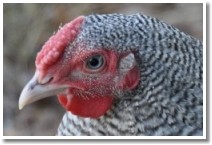
California Grey
Number Hatched: 739 |
The California Grey is an American breed of domestic chicken. It was developed in California in the 1930s by Horace Dryden in Modesto, California. His aim was to produce a dual-purpose chicken that was both suitable for meat production and laid large white eggs. By crossing a Barred Plymouth Rock rooster and a White Leghorn hen, a naturally autosexing breed with gray barred plumage (as adults) was produced. Largely because the breed was never recognized officially for exhibition by the American Poultry Association, The California Grey is a rare breed in the twenty-first century. [Wikipedia]
|
Type:
Production |
Egg Color:
White |
Lay Rate:
260-280 |
Egg Size:
Medium |
Broody:
No |
Day-Old:
Sorted |
|
|
|
|
|
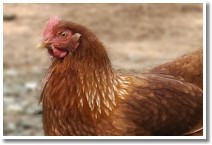
Cinnamon Queens
Number Hatched: 9,511 |
Cinnamon Queen hens begin laying at an earlier age than most other breeds and are excellent layers of extra-large, brown eggs with egg production of 250-300 annually. They have a reputation as being particularly sweet and docile birds. Many owners say they are the sweetest members of the flock. Cinnamon Queens are a cross of a Rhode Island Red male and the Rhode Island White female and will not breed true.
|
Type:
Hybrid Layer |
Egg Color:
Brown |
Lay Rate:
280-300 Superior |
Egg Size:
Large to X-Large |
Broody:
No |
Day-Old:
Sexed |
|
|
|
|
|
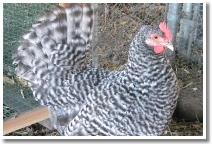
Dominique Layers
Number Hatched: 1,873 |
The Dominique, also known as Dominicker or Pilgrim Fowl, originated in the United States during the colonial period and is considered America's oldest breed of chicken. By the 19th century, they were widely popular and were raised in many parts of the country. They weigh 6 to 8 pounds at maturity. In earlier times, their feathers were much sought after as stuffing for pillows and mattresses. They were added to our flock in 2014 as we sought a small hen that would do well at free ranging, resist predation by wild animals, and remain productive for several year.
|
Type:
Production |
Egg Color:
Brown |
Lay Rate:
250-280 Excellent |
Egg Size:
Medium-Large |
Broody:
No |
Day-Old:
Sexed |
|
|
|
|
|
Easter Eggers
Number Hatched: 1,091 |
Easter Eggers are not a breed per se, but a variety of chicken that does not conform to any breed standard but lays large to extra large eggs that vary in shade from blue to green to olive to aqua and sometimes even pinkish. Easter Eggers vary widely in color and conformation, and are exceptionally friendly and hardy. Since they are usually quite friendly to children and humans in general, they are a great choice for a family flock. Our flock was originally obtained from Ideal Poultry with the best of the best retained for breeding. While not a true breed, our Easter Eggers retain the characterisitcs of their parent stock.
|
Type:
Novelty |
Egg Color:
Green/Olive |
Lay Rate:
220 Good |
Egg Size:
Large |
Broody:
No |
Day-Old:
Unsexed |
|
|
|
|
|
Golden Pheasants
Number Hatched: 879 |
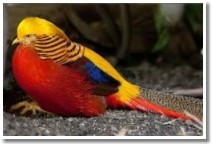
The Golden Pheasant is one of the most popular of all pheasant species kept in captivity. It is very beautiful, hardy, easy to keep and great for beginners. The Golden has been kept in captivity since as early as 1740 and perhaps was the first type of pheasant brought to North America. There is evidence that George Washington may have kept them at Mt. Vernon! This species readily breeds in captivity. The hen will begin to lay her clutch of 8 to 12 eggs in April. Incubation lasts about 22 to 23 days. The chicks are very easy to raise, and are often used to "teach" rarer species to eat.
|
Type:
Ornamental |
Egg Color:
Cream |
Lay Rate:
Seasonal |
Egg Size:
Very Small |
Broody:
Occasionally |
Day-Old:
Unsexed |
| Varieties: Red Golden and Yellow Golden |
|
|
|
|
|
Heritage Bronze Turkeys
Number Hatched: 949 |
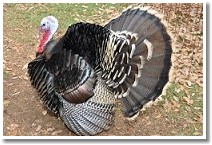
Heritage Bronze turkeys look like what people think a turkey ought to look like. They are the largest among the heritage breed, are naturally reproducing, and are extremely social animals. Hens will begin laying in March of each year and continue to lay until mid-July. Hens are extremely broody though they are not necessarily good mothers. A Tom’s plumage and strutting is an impressive sight and they are not know to be overly aggressive. A young, roasted Heritage Bronze turkey is moist and very tasty. A Heritage Bronze makes an excellent addition to any barnyard flock.
|
Type:
Heritage Turkey |
Egg Color:
Speckled |
Lay Rate:
Seasonal |
Egg Size:
Extra Large |
Broody:
Yes |
Day-Old:
Unsexed |
|
|
|
|
|
India Blue Peafowl
Number Hatched: 693 |
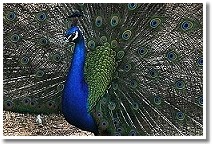
The Indian Blue peafowl (Pavo cristatus) is a large and brightly colored bird of the pheasant family native to South Asia. The male peacock is predominantly blue and is best known for the long train made up of elongated tail covert feathers which bear colorful eyespots. The female lacks the train, has a greenish lower neck and a duller brown plumage. Through domesticated breeding programs, numerous variations in color and patterns have evolved from the wild blue type. Unlike traditional barn-yard poultry, peafowl mature slowly and require greater care when young. They are excellent flyers and do well within confined pens as well as free ranges.
|
Type:
Ornamental |
Egg Color:
Cream |
Lay Rate:
Seasonal |
Egg Size:
Extra-Large |
Broody:
Frequently |
Day-Old:
Unsexed |
| Varieties: Blue, Pied Blue, Black Shoulder, White, and Purple |
|
|
|
|
|
Lady Grays
Number Hatched: 1,922 |
Lady Grays are hybrid laying hens utilizing a Splash Ameraucana rooster (blue eggs) and California Grey hens (white eggs). Like their Ameraucana parent, they tend to be slow to mature but lay lots of large pastel blue to bluish green eggs. They are fearless and loaded with personality… they think they are special. Most day-old males have a light silver spot on their head and are removed at hatch; however, Lady Grays are sold as “sorted” and you can expect an occasional male to remain undetectable until puberty.
|
Type:
Novelty/Layer |
Egg Color:
Pastel Blue |
Lay Rate:
260-280 Good |
Egg Size:
Lge to X-Lge |
Broody:
Rare |
Day-Old:
Sorted |
| Varieties: Blue Feathered |
|
|
|
|
|
Rhode Island Reds
Number Hatched: 1,031 |
The Rhode Island Red is not only America's best known breed, but is perhaps the world's best known fowl. It is the most successful dual purpose bird, and remains an excellent farm chicken. Originally developed in Massachusetts and Rhode Island in the 1880's and 1890's, its ancestors include Malay, Shanghai, Java, and Brown Leghorn chickens. Its distinctive color and good production qualities helped it to spread rapidly. This variety is a cross between a heritage RIR rooster and production RIR hens.
|
Type:
Production |
Egg Color:
Brown |
Lay Rate:
260 Excellent |
Egg Size:
Large to Extra Large |
Broody:
No |
Day-Old:
Unsexed |
|
|
|
|
|
Rhode Island Whites
Number Hatched: 623 |
Rhode Island Whites are similar to their heritage cousins; however, they are bred specifically for superior production of large brown eggs. They are a white bird with a single comb, yellow skin, and clean legs. Production Whites are relatively slender and more closely resemble a white Leghorn than the classic Rhode Island White. Production White hens, given the proper diet, lay more eggs than any other breed I’ve owned including white leghorns. Given their white feathering, they are subject to hawk predation and do best in covered runs. Because they lay so many eggs, their feathering gets rather thin and tattered as the laying season progresses. We generally only hatch one batch of Production Whites each year.
|
Type:
Production |
Egg Color:
Brown |
Lay Rate:
280-320 Superior |
Egg Size:
Large to Extra Large |
Broody:
No |
Day-Old:
Unsexed |
|
|
|
|
|
Tinks Bantams
Number Hatched: 1,295 |
Tinks bantams are small bantams created using Serema, Nankin, and Old English bantams. Although not a recognized breed, they breed true as to size and form; however, their coloring will vary from chick-to-chick with their adult coloring not being revealed until they are fully feathered. Males are brightly colored with the body color ranging from gold, to wheaton, to black, to calico. Female coloring is generally muted ranging from light brown to a subdued calico. Females lay a fair number of light cream-to-white eggs, frequent brooders, and excellent mothers. Although small in stature, these birds are proud and bold having no problem standing toe-to-toe with their large fowl cousins. Our Tinks bantams free range near the house and are considered beautiful yard art.
|
Type:
Bantam |
Egg Color:
Cream |
Lay Rate:
Fair |
Egg Size:
Extra-Small |
Broody:
Frequent |
Day-Old:
Unsexed |
|
|
|

Calvin & Cindy Roberts
488 County Road 335
San Augustine, Texas 75972
(936) 652-1940 (Text Only)• mail@calvinroberts.us
|
|
DISCLAIMER: Prices, products, and services described on this website may or may not accurately reflect
current prices, products, and services and are subject to change without prior notice. For more current information, please
contact us by telephone or email. Live animals carry risk of salmonella and other diseases and should be handled accordingly
|
|